Optimizing Mold Development & Part Production through 3D Printing Integration
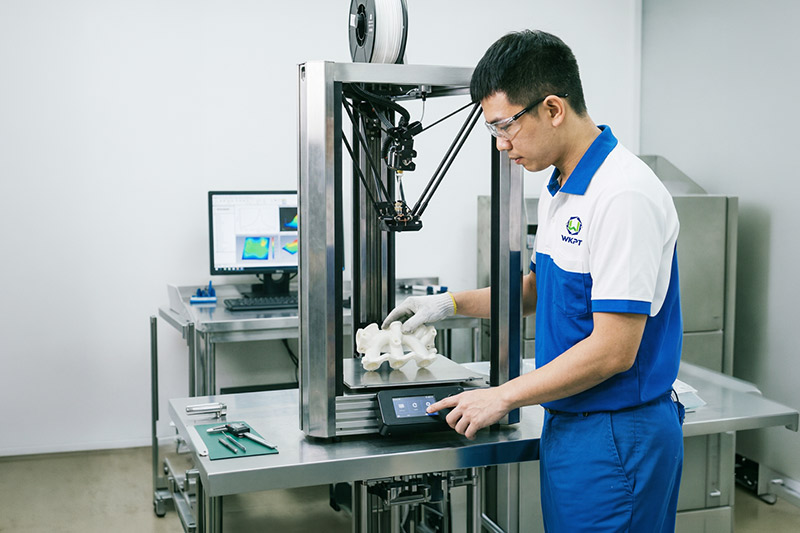
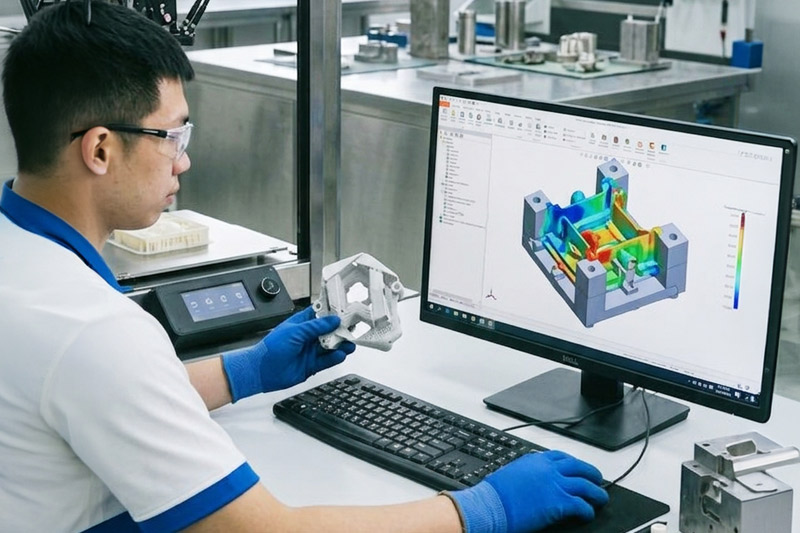
In the initial stages of product development, 3D printed physical models are our critical starting point for risk management and Design for Manufacturing (DFM) assessment. Operating under strict NDA and IP protection protocols, we conduct immediate physical inspections upon receiving CAD data. This allows us to rapidly identify potential manufacturing issues—such as structural interference, datum alignment for machining, and draft angles—preventing oversights caused by relying solely on virtual models and reducing the high costs of modifying metal tooling later.
-
Through 3D printed models, our R&D and engineering teams directly validate physical structures:
- GD&T and Structural Inspection: Physical models rapidly reveal potential issues with chamfers, wall thickness variations, or datum setups for subsequent precision CNC machining.
Design changes are often the primary cause of project delays. Additive manufacturing provides a solution for real-time validation. If design adjustments are needed, our engineering team can print the latest prototype within hours for assembly testing and functional validation, replacing the traditional weeks-long wait for external samples. More importantly, the physical model serves as a universal language across departments. It allows R&D, casting, CNC production, and QA teams to tangibly discuss process bottlenecks before formal tooling begins.
-
Compared to traditional drawing modifications that take weeks, our rapid prototyping offers:
- Real-Time Validation of Design Changes: Engineers can conduct visual, assembly, and interference checks in a fraction of the time, significantly lowering upfront development risks.
- Concurrent Engineering: Physical models enable all departments to address mass-production bottlenecks and optimization strategies tangibly before tooling kicks off.
Before investing in complex die-casting or sand casting tooling, we conduct structural forecasting using printed models. The most critical step is validating the shrinkage rate compensation. Only when the printed model's dimensional accuracy is verified via Coordinate Measuring Machine (CMM) or advanced 3D scanning do we proceed to manufacture the actual metal tooling. This preliminary validation ensures the feasibility of large-scale production and prevents costly tooling scrap.
-
For metal forming tooling development, our Additive Manufacturing technology provides:
- Tooling Structure and Draft Analysis: Analyzing the optimal demolding methods and gating systems before developing complex casting molds.
- Shrinkage Rate and Tolerance Validation: Ensuring accurate shrinkage compensation through high-precision scanning. We only proceed to actual tooling production once the model meets mass-production standards.
- Time Efficiency: DFM simulation and validation occur concurrently before metal tooling is completed, reducing the overall development cycle by over 30%.
- Quality Assurance: Combined with high-precision inspection equipment, we minimize human error and ensure that mass-production molds, CNC fixtures, and gauges are right the first time.
- Mass Production Risk Control: Operating within the IATF 16949 quality management framework, we ensure all designs are fully viable for large-scale production before incurring expensive tooling costs.
Further Reading:Part Machining and Prototype Manufacturing